
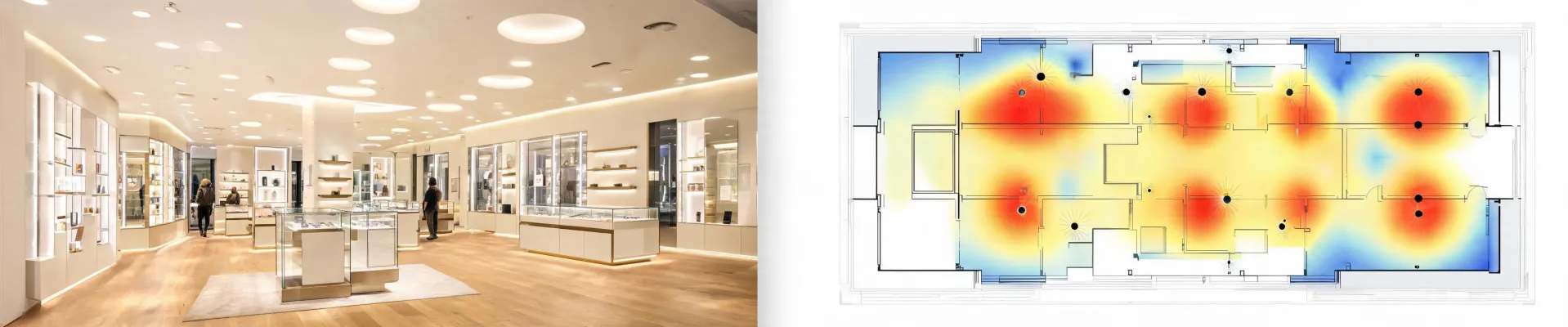
Last spring, a contractor called me about a ceiling light order that had already gone sideways. He had chosen the lower of two quotes for 200 downlights. That quote was $1.40 less per unit than the alternative. By the time his electrician had replaced seven incompatible drivers and paid for a second freight drop, the cheaper order had cost about $4,800 more than the other option. He asked me why I hadn't warned him. I had, sort of. But I couldn't show him the full math until the invoice proved it.
The problem wasn't the fixture price. The problem was that he compared quote line items instead of total cost. That mistake is the reason I wrote this downlight wholesale cost guide.
I'm a procurement manager at a regional lighting distributor. I've managed a lighting budget of roughly $480,000 a year for the past six years, negotiated with dozens of fixture suppliers, and logged every order in our own cost tracking system. I don't have hard data on how many contractors make the same mistake, but based on the order history we review, I'd guess that most projects that go over budget have at least one hidden cost that was visible before the order was signed. You just have to know where to look.
Why Downlight Wholesale Quotes Are Incomplete
Most buyers assume a downlight wholesale cost guide is about finding a low unit price. I used to think that too. In 2023, I almost approved a 2,000-fixture order for a hotel renovation based on a quote that was $4.10 per unit below the better documented one. Then our TCO spreadsheet stopped me. The low quote didn't include photometric files, used a different driver brand than the sample, and required a 26-week lead time instead of 8 weeks. I went back and forth between the low quote and the safer quote for two weeks. On paper, the low quote made sense. My gut said the driver difference would bite us. It did.
Here's what I've learned: a quote for a downlight is not a complete price. It's a skeleton. The real cost fills in when you answer four questions.
1. Are the specs actually the same?
Ceiling light prices depend heavily on wattage, driver, CCT, finish, beam angle, and dimming options. A 12W downlight from one supplier is not necessarily the same as a 12W downlight from another. If you compare line items without checking the photometric files, you aren't comparing prices. You're guessing.
When we started reviewing Opple ceiling light ranges for our stock, the first thing I looked for wasn't the discount. It was the spec sheet. An Opple ceiling light quote that includes IES files, driver specs, and LM-80 data is more useful to me than a bare line item from a supplier who can't explain their L70 rating.
2. What does the landed cost include?
Freight, duties, pallet fees, repacking, sample charges, and documentation fees rarely appear on the first line of a quote. I've seen 'free shipping' offers that were only free if you didn't count the minimum order quantity or the split-drop fee. To be fair, some low quotes are just efficient suppliers passing on savings. The problem is when the quote is incomplete, not when the number is low.
3. Is there real reliability data?
Reliability is the biggest hidden cost in commercial lighting. A claim of 50,000-hour life means nothing if the LED package and driver aren't documented. I ask for LM-80 reports for the LED package, L70 life projections, and driver specifications. I'm somewhat skeptical of any 10-year warranty from a brand I can't call. The DesignLights Consortium qualified products list is a useful check for many commercial downlights and panels, and it gives you a comparison point that doesn't depend on marketing language.
4. What changes when you add your name to the fixture?
Light fixture OEM programs are the most dangerous places for hidden costs. Many suppliers quote a base fixture, then add engineering charges, label printing, certification testing, and packaging revisions after you're already committed. If you're doing a light fixture OEM program, ask these questions before the first sample: which certifications are included, who owns the test reports, what changes cost, and what the minimum order is per finish. Write the answers into the agreement.
What an Incomplete Quote Actually Costs
Let me make this concrete. In Q2 2024, we ran a comparison for 240 recessed downlights. The low quote was $51 per unit. The higher quote was $62 per unit. The unit-price difference was $2,640. The low quote didn't include freight, didn't provide dimming compatibility tests, and used a driver we had never sourced before. I don't have hard data on whether that product would fail on every job, but my sense from past orders was that the missing information would turn into money.
So we added the costs to the spreadsheet:
- Freight, because the low quote didn't include it: $1,050.
- Extra electrician time because the fixtures arrived with no dimming compatibility test: $1,400.
- Replacement drivers for the 11 fixtures that flickered on the specified control system: $980.
The low quote ended up about $790 more expensive than the higher quote, and that was before we valued the delay. Now multiply that pattern across your annual volume. If you buy 3,000 downlights per year and 'save' a few dollars per unit, failures, delays, and restocking can eat the savings faster than you can record them.
The most undercounted cost is time. A 12-week delivery is fine only if your schedule has slack. In a commercial build, it rarely does. Every week of delay carries carrying costs, penalties, and awkward client conversations. Some of these costs are impossible to estimate precisely. You still need to put a placeholder in the spreadsheet.
Maintenance is another cost we often forget. A cheap driver might die at 20,000 hours. A better driver might last 50,000. If a ceiling light is in an atrium that requires a lift for every replacement, a single driver swap can cost $140 in labor and equipment. That's not a possible cost. It's a probability with a price tag.
Comparing Track Lighting Suppliers and OEM Programs
Track lighting is a different animal. If you're choosing a track lighting supplier, ask about the track cross-section, connector termination, and dimming compatibility before you ask for price. Track is where hidden compatibility costs live. A track head that doesn't fit correctly or doesn't communicate with the control system will create callbacks, and callbacks are a line item no quote shows you.
Opple commercial lighting has been part of our evaluation process for both stock and private-label programs. I don't think they're the right supplier for every order. But their commercial lighting range covers enough subcategories that we can consolidate orders, and their quoting process includes the documentation I need. I still verify every claim, because that's my job. But I'd rather start with a complete document than a blank page.
For OEM work, we've used Opple's light fixture OEM process on a few private-label runs. It wasn't the cheapest route, and it wasn't supposed to be. What mattered was that the engineering changes, certification markings, and packaging approvals were documented before we paid for tooling. That level of transparency prevents surprises later.
Fix the Process, Not Just the Price
If there's one thing I want you to take from this downlight wholesale cost guide, it's this: don't compare quote prices until you've made the quotes comparable.
Here's the simple process we now use:
- Send every supplier the same fixture specification, including driver requirements, CCT, beam angle, dimming compatibility, and certifications.
- Ask for the same set of documents: IES files, LM-80/L70 data, driver data sheets, warranty terms, and lead time.
- Add freight, duties, payment terms, sample fees, and any repacking costs to the quote before you compare it.
- Test samples on the actual control system before you commit to a large order.
- For OEM programs, get every change order priced in writing before production starts.
This isn't complicated. It's just less exciting than finding a low number. But the low number is where the complex cost story begins, not where it ends.
To be fair, the cheapest quote is not always a trap. It can be the right call for a short-term project where the lights might be replaced in two years. But when you're buying commercial downlights and ceiling lights that are expected to last a decade, total cost thinking matters more than unit price.
That's why we decided to stock Opple commercial lighting. It wasn't because Opple's quote was the lowest. It was because the total cost of acquiring, documenting, supporting, and warranting the products fit within our budget. The line's L70 and driver documentation gave us enough confidence to put our name behind it.
The low quote isn't the problem. The lack of information is. Once you can see the full cost picture, the right decision becomes obvious. That's what a real downlight wholesale cost guide should do: make the invisible costs visible.

Clara Whitmore
Clara Whitmore is a lighting photometry and LED source analyst specializing in bulbs, tubes, strips, panels, and integrated luminaires. She interprets IES LM-79 measurements and TM-30 color rendition data through luminous flux, efficacy, intensity distribution, CCT, chromaticity, fidelity, and gamut metrics. She writes evidence-led comparisons for specifiers selecting source formats and luminaires for commercial interiors, industrial spaces, or horticultural systems where measured optical and color performance matter.