
Opple brand logo

Commercial lighting systems

Opple brings photometric decisions into focus

Compare distribution, visual comfort, controls compatibility and installation constraints before a fixture enters the project schedule.
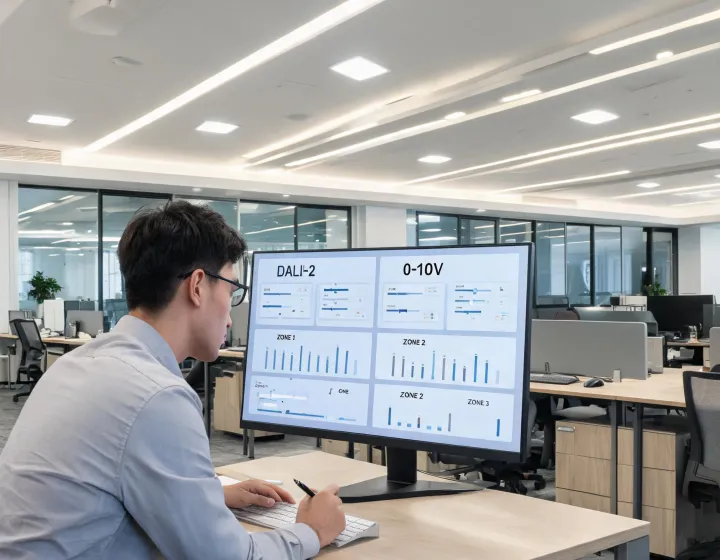
Commercial lighting controls dashboard beside installed office luminaires
0-10VDALI-2OccupancyDaylight

Conditional compliance evidence

Marks belong to a configured product, not a family-wide assumption

ULConfirm the exact North American catalog configuration and file scope.
CEReview the declaration and destination requirements for the selected luminaire.
RoHSVerify applicable material-restriction documentation by market and revision.
IES / LDTMatch each photometric file to its optic, lumen package and test condition.

Two-column specification check

Optical intent and system behavior must be reviewed together

Nominal output does not describe the installed result. Compare the candidate luminaire against the project condition before approving a schedule.

Photometric criteria

Luminous flux, candela distribution, beam angle, UGR objective, CCT, CRI and TM-30 context define how the source serves the task and surfaces.

Electrical and controls criteria

Input voltage, power factor, total harmonic distortion, 0-10V or DALI-2 interface, emergency behavior and sensor topology determine commissioning requirements.

Installation and lifecycle criteria

Ceiling construction, thermal environment, driver access, IP or IK need, cleaning method and replacement strategy influence suitability beyond initial efficacy.

Application environments

Light for task, people and space

OfficeUGR and daylight response
EducationFlexible scenes and controls
HealthcareVisual acuity and maintenance
RetailTM-30 and beam control
HospitalityDimming and warm CCT

Project review

Put files, controls and field conditions on the same checklist

Share the mounting condition, target light level, control protocol and jurisdiction. Our response can identify which photometric and compliance documents belong in the next review.

  • Optical distribution and BUG or UGR context
  • Driver, sensor and dimming-interface coordination
  • UL, CE or RoHS scope limited to configured product claims