
-
The 7-Step Lighting Procurement Checklist
-
Step 1: Map your lighting zones before you open a single catalog
-
Step 2: Build a TCO spreadsheet before you request quotes
-
Step 3: Run the LED vs. fluorescent math for every zone, not just production
-
Step 4: Vet under-canopy lighting separately from overhead fixtures
-
Step 5: Demand third-party specs for any specific model you're evaluating
-
Step 6: Budget non-production lighting by brand impact, not by square foot
-
Step 7: Score vendors on a weighted matrix—then negotiate from data
-
Step 1: Map your lighting zones before you open a single catalog
-
Common mistakes I've made (so you don't have to)
I manage procurement for a 45-person controlled-environment agriculture operation. Over the past 6 years, I've signed off on roughly $180,000 in lighting purchases—everything from full-room Gavita retrofits to the vintage chandelier in our visitor lobby. (Should mention: I keep a spreadsheet of every invoice, which is how I know that number is accurate to within about $2,000.)
This checklist is what I wish someone had handed me in 2019, when I approved a "deal" on fluorescent tubes that ended up costing us $1,100 more in replacement labor over 18 months than the LED option I'd passed over to save $600 upfront.
Here are the 7 steps I now follow for every lighting purchase. It takes about two weeks from start to finish, and it's saved us (conservatively) $14,000 in avoidable costs since I started using it in 2023.
(Note: prices in this article are based on publicly available quotes from major suppliers and my own purchase records as of early 2025. Verify current pricing before you commit.)
The 7-Step Lighting Procurement Checklist
Step 1: Map your lighting zones before you open a single catalog
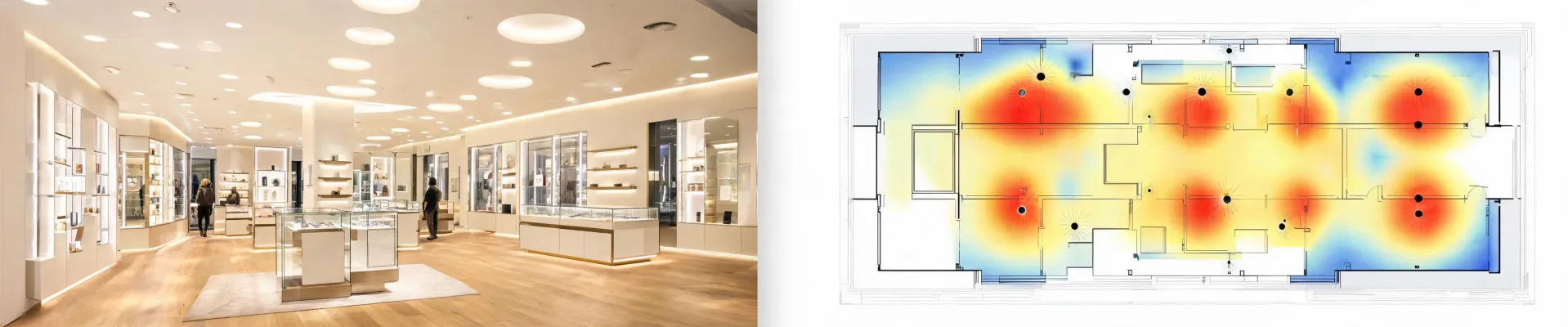
Most procurement mistakes start here. You don't buy "lights"—you buy lights for specific zones with different requirements.
In our facility, we have four zones:
- Propagation rooms (high humidity, need precise spectrum control)
- Flower rooms (highest wattage, longest daily runtime)
- Vegetative rooms (moderate wattage, flexibility matters)
- Non-production areas (lobby, offices, loading dock—more on this in Step 6)
Write down the square footage, ceiling height, and daily runtime for each zone. This takes maybe 45 minutes. It will save you hours of vendor back-and-forth later.
One thing I learned the hard way: don't let a vendor define your zones for you. In 2022, a sales rep talked me into standardizing our veg and flower rooms on the same fixture to "simplify procurement." It didn't simplify anything—it just meant we were overpaying by about 18% on veg room lighting for a full year.
Step 2: Build a TCO spreadsheet before you request quotes
TCO—total cost of ownership—is the only number that matters. Not sticker price.
My spreadsheet has six columns per fixture option:
- Unit price
- Installation cost (per unit, including any electrical work)
- Annual energy cost (wattage × hours × your kWh rate)
- Expected lifespan (hours)
- Replacement cost per year (unit price ÷ lifespan in years)
- Maintenance cost per year (labor + parts)
For a 50-fixture room, the difference between a $200 unit and a $350 unit often flips once you run the numbers over 5 years.
Case in point: in Q2 2024, I compared two LED options for our flower room. Option A was $285 per fixture. Option B was $410. On paper, A looked obviously better. But B's efficiency rating meant roughly $38 less per fixture in annual energy costs. Over 5 years across 60 fixtures, that's $11,400 in savings—more than enough to justify the higher upfront cost.
Step 3: Run the LED vs. fluorescent math for every zone, not just production
This is where a lot of facilities leave money on the table. They upgrade the grow rooms to LED and then keep fluorescent tubes in the clone room, the hallway, the office—because "it's just a few fixtures."
Let me be direct: the led tube light vs fluorescent comparison almost always favors LED when you factor in lifetime cost. But don't take my word for it—run the numbers yourself.
A standard 4-foot fluorescent tube uses about 32 watts. Its LED equivalent uses roughly 15–18 watts for comparable output. A fluorescent tube lasts around 20,000–30,000 hours; LED tubes last 40,000–50,000. And fluorescent tubes contain mercury, which means disposal costs and regulatory headaches in some jurisdictions.
For our facility, replacing the 24 fluorescent tubes in our propagation hallway with LED tubes cost about $480 upfront (fixtures + install) and saves roughly $190 per year in electricity alone. Payback: about 2.5 years. After that, it's pure savings—plus we stopped having to deal with bulb disposal.
(Should mention: we're in a state with relatively high energy costs, so your payback might be longer. But I've never seen a commercial scenario where fluorescent came out ahead over 5+ years.) (Note to self: check whether our utility offers LED rebates—we missed that the first year.)
Step 4: Vet under-canopy lighting separately from overhead fixtures
Under-canopy lighting—the fixtures that sit below the canopy to reach lower leaves—has different requirements than overhead lights. You need fixtures that handle humidity, resist water ingress, and don't block your aisles or interfere with irrigation lines.
We run Gavita under canopy lights in two of our flower rooms. The reason isn't brand loyalty—it's that when I compared them against three alternatives in 2024, the Gavita option had the best IP rating for our humidity levels and the lowest per-fixture maintenance cost over a 3-year estimate. (I might be misremembering the exact IP number—it's IP65 or IP66—but the point is that it was sealed well enough that we haven't had a single moisture-related failure in 14 months.)
Here's the thing most people miss: under-canopy fixtures are often installed in tight, awkward spots where swapping them out is a pain. Labor to replace one fixture in a mature canopy can run 3–4× the fixture cost. So pay attention to lifespan and serviceability, not just upfront price.
Step 5: Demand third-party specs for any specific model you're evaluating
When I was evaluating the Gavita Pro 1000 LED for our main flower room, the sales rep sent me a nice PDF with impressive numbers. That's not enough. I asked for third-party photometric testing data, and honestly, I've started requiring this for every model we consider.
Why it matters: manufacturer-reported specs can be optimistic. Third-party testing—from labs like DLC (DesignLights Consortium) or independent university studies—gives you a baseline you can actually compare.
For the Pro 1000 LED specifically, the third-party data matched what we saw in our own measurements within about 5%. That's a good sign. Not every vendor passes that test. (I won't name names, but I've seen efficiency claims that were off by 15%+ from third-party data.)
To be fair, third-party data isn't always available for every model. But if a vendor can't or won't provide it for a commercial-scale purchase, that tells you something about how they operate.
Step 6: Budget non-production lighting by brand impact, not by square foot
Here's a step that took me three years to figure out.
We spent months optimizing grow room lighting costs down to the penny. Meanwhile, the first thing any visitor sees when they walk into our facility is the lobby—which had a stained drop ceiling and a fluorescent panel light that buzzed.
When we renovated the lobby in 2023, I spent $1,200 on a vintage chandelier for the entry area and $450 on a Ghiaccio chandelier for the small conference room where we meet with buyers. My finance director thought I'd lost my mind. But here's what happened: during our next buyer visit, two separate clients commented on how "professional" the facility felt. One of them specifically mentioned the lobby lighting.
That's when it clicked for me. The quality of what you present—even in the lobby—shapes how people perceive everything else you do. If your entryway looks like a $5 footlong operation, buyers will subconsciously question whether your product matches your claims.
I'm not saying go buy a $5,000 chandelier. I'm saying don't use grow-room cost discipline on spaces that exist to impress humans. Budget those areas separately. Our rule now: production lighting is evaluated on TCO; client-facing lighting is evaluated on whether it makes the right impression. Different zones, different rules. (The $1,200 vintage chandelier felt extravagant at the time—thankfully, it held up well, no bulbs to replace in 18 months.)
Step 7: Score vendors on a weighted matrix—then negotiate from data
My final step is a scoring sheet. I rank vendors on:
- TCO over 5 years (40% weight)
- Third-party spec verification (20%)
- After-sales support terms (15%)
- Lead time and stock availability (15%)
- Warranty terms (10%)
I send this scoring framework to every vendor before they quote. Yes, it tells them exactly what I care about—and that's the point. It filters out vendors who can't meet the criteria, and it opens the door to real negotiations with the ones who can. (Ugh, I've been burned by a "competitive" quote that turned out to be missing installation costs—never again.)
When we switched our flower room to Gavita Pro 1000 LED last year, this matrix showed Gavita winning on TCO (best efficiency) and after-sales support (they had a local rep who could be on-site within 48 hours). The upfront price was higher than two competitors. The 5-year TCO was 11% lower.
That's the negotiation lever: "Your sticker price is higher, but your TCO is the best. If you can close the upfront gap by 10%, we'll sign a 3-year phased rollout." They did. We saved about $6,800 on the first order alone.
Common mistakes I've made (so you don't have to)
A few things I'd do differently if I could go back:
Assuming "LED" means "efficient." Not all LED fixtures are created equal. Two fixtures can both be "LED" with 30% difference in efficiency. Always check the actual wattage and PPF/W numbers.
Skipping the TCO math for small purchases. I used to think "$200 doesn't justify a spreadsheet." Then I realized we were making 15–20 small lighting purchases a year, and the compounding effect of choosing poorly on each one added up to real money.
Letting a single vendor spec my entire facility. Standardizing on one brand simplifies procurement on paper. But it also kills your negotiating leverage. Keep at least two qualified vendors for every category, even if you end up buying from one.
Ignoring the cost of downtime. A fixture that fails in week 6 costs way more than the replacement part—it costs you labor in a mature canopy, potential crop impact, and time. I now require a 3-year minimum warranty on any fixture in a production zone. If a vendor won't offer that, that's a red flag.
So glad I started tracking every invoice in 2019. It took about 20 seconds per order to log, but it means I'm never guessing when a vendor says "prices have gone up." I can pull up our exact historical pricing in 30 seconds and push back with data.
If you're starting from scratch, just start the spreadsheet today. It took me about 150 orders to fully understand which vendor relationships were worth investing in—but the data was useful from order one.

Adrian Flores
Adrian Flores is an architectural and decorative lighting analyst specializing in pendant lights, chandeliers, wall lights, floor lamps, table lamps, and track lighting. He applies IEC 60598-1 luminaire requirements and photometric data to examine beam angle, shielding, surface temperature, mounting geometry, dimming compatibility, and glare. He writes practical guides for designers and buyers balancing visual character with usable illumination, safe installation, maintenance access, and total project cost.