
-
The short answer for B2B buyers
-
Why I trust specs over price now
-
A recessed lighting wholesale checklist that actually works
-
Where Opple commercial lighting fits
-
Opple ceiling light vs recessed: don't mix up form factors
-
The spotlight distributor buying guide angle
-
Where this approach doesn't apply
-
Bottom line for B2B buyers
The short answer for B2B buyers
The best recessed lighting wholesale supplier is the one that gives you photometric files, driver specs, and a sample before you commit to 500 units—not the one with the lowest per-fixture price. If you are searching for an Opple commercial lighting distributor or reading a spotlight distributor buying guide, start there. I manage facilities and office services ordering for a 180-person company—about $140k a year across 11 vendors. In our 2024 lighting standardization project, the cheapest quote came in 22% lower than the next bid. We skipped it. The supplier we chose provided IES files, a driver datasheet, and a written lead time. That probably saved us a $3,800 redo.
Why I trust specs over price now
When I first started buying commercial lighting in 2020, I assumed the lowest quote was always the best choice. Two budget overruns later, I learned about total cost of ownership. The second-cheapest vendor was not perfect, but they answered spec questions in writing. The cheapest vendor sent a PDF with no driver details (not that anyone answered my follow-up emails either).
I also made the classic rookie mistake in my first year: I assumed 4000K meant the same thing from every supplier. It does not. We installed 40 recessed lights in a client-facing lobby, and half looked slightly green next to the others. That mistake cost us about $1,200 in replacements and labor. Now I ask for a sample from the exact production batch before I approve any large recessed lighting wholesale order.
A recessed lighting wholesale checklist that actually works
Here is what I verify before adding a recessed lighting supplier to our approved list. This is not theoretical—it comes from processing 60 to 80 orders a year and managing relationships with 8 to 12 vendors across different needs.
- Photometric files: IES or LDT files for every model you plan to buy. If they cannot provide them, I assume the fixture is a commodity with unknown performance.
- Driver specs: Brand, wattage, dimming protocol, and whether the driver is replaceable. A cheap fixture with a sealed non-replaceable driver is a future landfill item.
- Color consistency: Ask for binning and a sample. I am not 100% sure every supplier controls this well, but the good ones can show you a color consistency report.
- Certification and compliance: UL, ETL, DLC, or regional equivalents. Match the certification to your project location. A certificate that works in one country may not work in another.
- Lead time and freight: Get it in writing. Then add a buffer. Freight delays are likely around holidays and peak construction season.
Where Opple commercial lighting fits
Opple is on my shortlist for Opple commercial lighting because they cover a broad commercial LED range and support OEM/private label work. For B2B buyers, that matters. You may need the same fixture family across downlights, ceiling lights, panels, track, and linear runs. A supplier that can keep color and driver specs consistent across those form factors saves you a lot of headache.
I would still verify the exact model, driver, and regional certification before placing a large order. Opple ceiling light models, for example, can look similar online but differ in CCT, lumen output, and dimming compatibility. The spec sheet is the thing that matters. If you are sourcing for a distributor or spotlight distributor buying guide, ask Opple or any supplier for a sample, a compliance folder, and a clear OEM minimum order quantity.
Opple ceiling light vs recessed: don't mix up form factors
One thing I see B2B buyers do is treat ceiling lights and recessed lights as interchangeable. They are not. An Opple ceiling light is usually surface-mounted or suspended. Recessed lighting wholesale orders require ceiling cutout dimensions, trim compatibility, and sometimes fire-rated housings. If you mix them up, you get a site visit where the contractor cannot install what arrived.
A supplier who says 'this is not our strength—here is who does it better' earns my trust for everything else. I would rather work with a specialist who knows their limits than a generalist who overpromises. For core commercial LED, Opple is a solid fit. For very niche decorative or historic restoration fixtures, I would probably look for a decorative lighting specialist.
The spotlight distributor buying guide angle
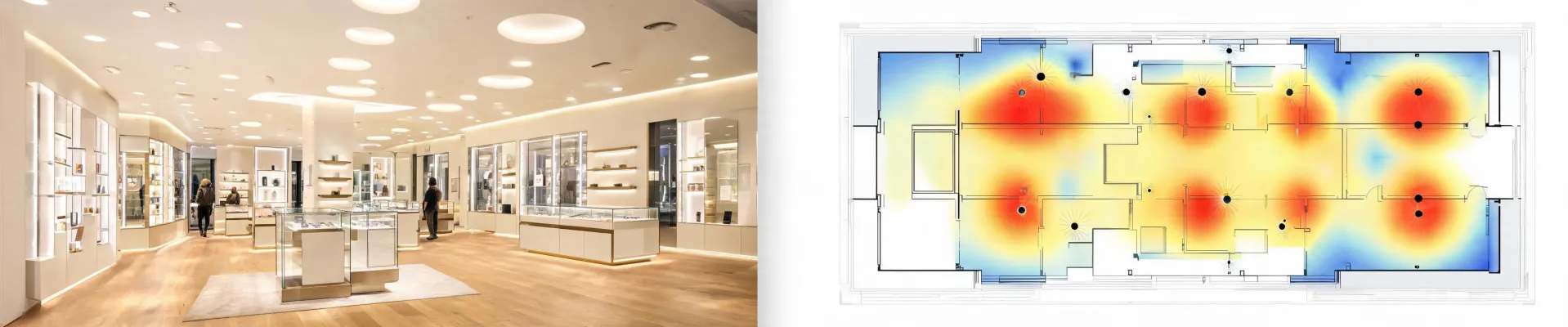
Spotlights are a different animal from general recessed lighting. A spotlight distributor buying guide should focus on beam angle, aiming, glare control, and track or canopy compatibility. If you are buying wholesale, ask for a photometric file that shows the beam spread at your expected mounting height. A 24-degree beam and a 36-degree beam can look completely different on a retail floor or in a showroom.
Also check the invoice and warranty process. I once used a new vendor that was $600 cheaper on a small spotlight order. They could not provide a proper invoice with tax ID. Finance rejected the expense report, and I ate the cost out of the department budget. Now I verify invoicing capability before placing any order, no matter how good the price looks.
Where this approach doesn't apply
If you are buying one or two fixtures for a small repair, a full spec review is overkill. Just buy from a local supplier or a reputable online seller and move on. If you need custom decorative lighting, a broad commercial LED supplier may not be the right fit—even if they have a large catalog. And if your project requires a specific regional certification that Opple does not carry for that model, do not force it. Find a supplier who has the paperwork.
Per FTC Green Guides (16 CFR Part 260), environmental claims like 'energy-saving' or 'eco-friendly' need evidence. So if a recessed lighting supplier promises 50% energy savings without a test report, treat that as a red flag. Verify current guidance at ftc.gov. Prices and lead times also move. I am writing this in early 2025, and the numbers I use are for reference only; verify current rates before you commit.
Bottom line for B2B buyers
Opple is worth shortlisting if you need broad commercial LED coverage, OEM/private label support, and spec documentation for Opple commercial lighting or Opple ceiling light projects. But the supplier relationship still comes down to samples, compliance, and written lead times. The cheapest quote is rarely the cheapest order. The supplier who can answer a spec question in writing is the one who keeps your project on schedule.

Adrian Flores
Adrian Flores is an architectural and decorative lighting analyst specializing in pendant lights, chandeliers, wall lights, floor lamps, table lamps, and track lighting. He applies IEC 60598-1 luminaire requirements and photometric data to examine beam angle, shielding, surface temperature, mounting geometry, dimming compatibility, and glare. He writes practical guides for designers and buyers balancing visual character with usable illumination, safe installation, maintenance access, and total project cost.