
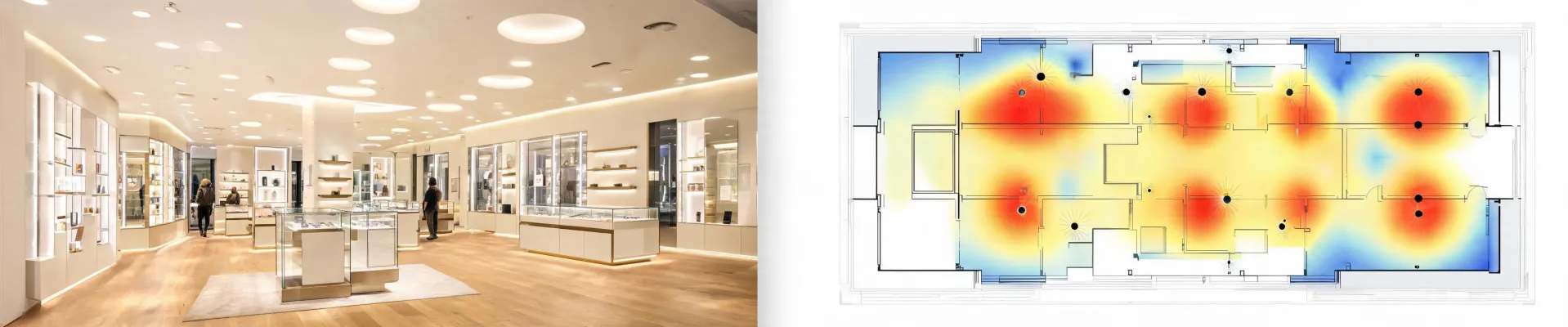
The Problem With "Best" Commercial Lighting
If you've ever spent three hours comparing commercial lighting specs and ended up more confused than when you started, you know the feeling. I've been reviewing LED fixtures as a quality and compliance manager for about five years now—roughly 1,200 SKUs a year, give or take. And after all that inspection work, I can tell you the one thing most buyers don't want to hear: there's no single "best" commercial light.
The vendor failure in March 2023 changed how I think about this. A 40,000-unit order that we sourced from an overseas supplier came back with the wrong color temperature in every single fixture. The documentation said 4000K. The actual LEDs were 3000K. Someone on the production line had swapped components. That mistake cost us a $22,000 redo and delayed the client's opening by three weeks.
Since then, I've gotten very direct about asking one question before recommending anything: what are you actually trying to light?
Because the honest answer for every buyer I talk to is different. The right fixture for a jewelry store is wrong for a warehouse. The perfect compliance setup for a municipal office is overkill for a boutique hotel. And the cheapest fixture often becomes the most expensive one you'll ever buy.
Here are the three scenarios I run into most often:
- Display-driven spaces that need flexible, repositionable accent light → bulk track lighting
- Offices and institutions that need certified, code-compliant ambient light → ceiling fixtures with proper documentation
- Multi-zone projects that need both, working together → a layered approach
Scenario 1: Bulk Track Lighting for Display-Driven Spaces
Track lighting gets a bad rap in some circles. "It's for art galleries and nothing else." To be fair, that used to be mostly true. But modern LED track heads have changed the calculation.
If your space changes layout regularly—retail stores, showrooms, restaurants, offices with rotating displays—a track system gives you something fixed ceiling lights can't: repositionable light. That's not a luxury in those spaces. That's a requirement.
In my Q1 2025 quality audit, I reviewed about 40 bulk track lighting orders. The ones that got reordered by the same customer within six months had three things in common:
- Adjustable beam angles. A 15° spot and a 40° flood on the same track let you highlight merchandise or wash a wall without swapping fixtures.
- High color rendering. Look for a CRI of 90 or above. The difference between 80 and 90 CRI is obvious when you compare the same fabric or food item under both. If a customer says "the product looks different in the store," this is the cause.
- Known track compatibility. H-track, J-track, and L-track are the three standard commercial systems. Know which one your space uses before you order heads, not after.
Should mention: bulk track lighting orders often get the color temperature wrong. I've seen purchase orders for "warm" track heads that arrived at 2700K when the customer's existing space was already lit at 4000K. The mismatch is jarring in a retail environment. If you're ordering in bulk, write the exact Kelvin value on your PO—3000K or 4000K—and don't leave it to a sales rep to interpret "warm."
If you're evaluating Opple commercial lighting options, or another brand, the same criteria apply. Our Opple commercial lighting line covers indoor and outdoor track systems, and we support OEM/private label programs like most larger manufacturers. But honestly, the brand matters less than the specification. Get the beam angle, CRI, and color temperature right, and any reputable supplier can fill the order.
Scenario 2: Ceiling Light Compliance for Offices and Institutions
When people ask me about ceiling light compliance requirements, I tell them it's three separate questions: safety, energy, and documentation. Most buyers only think about the first one.
1. Safety certification
In the U.S. and Canada, that's typically UL 1598 for luminaires. A UL-listed fixture has been tested for fire and electrical safety. If your jurisdiction enforces the building code—and most do for commercial spaces—UL listing isn't optional.
The pattern I run into more often than I'd like: a buyer orders LED panel lights from an overseas supplier because they're 30% cheaper, and the supplier sends a "certificate" that doesn't hold up. In 2023, we were asked to take over a project after the original supplier couldn't produce verifiable UL documentation. The fixtures looked fine. The inspector flagged the missing paperwork, and the entire floor had to be re-verified before occupancy. Three weeks of delay because of a file.
2. Energy efficiency requirements
This part depends on your state. The IECC (International Energy Conservation Code) sets lighting power density limits for commercial buildings in most states, and California's Title 24 goes further in several areas. If you're buying LED panels or downlights, the fixture's efficacy needs to meet your jurisdiction's requirements.
For utility rebates, you'll often need DLC (Design Lights Consortium) listing. The DLC V5.1 technical requirements are stricter than older versions—the minimum efficacy thresholds went up meaningfully. If a vendor tells you a product is "DLC listed," ask for the current Qualified Products List number and check it yourself. It took me two minutes last week and it saved a client from ordering 200 fixtures that wouldn't qualify for the rebate they were counting on.
3. Documentation and traceability
Here's the part nobody tells you about. You need spec sheets showing the actual performance data of the fixture you're buying, not the model family. You need test reports from an accredited laboratory. And if you're planning to order an Opple ceiling light for a commercial project—or any other brand's ceiling fixture—make sure the supplier provides that documentation before you commit. Not after.
I still kick myself for not verifying a supplier's UL listing back in 2022. If I'd checked their file number directly, we'd have caught that they were listing a similar model, not the one we were importing. That mistake cost us six weeks of re-testing and delayed a school project. The $18,000 order ended up costing more than the compliant alternative would have from the start.
Note: standards and code cycles change. Verify current requirements at the official DLC, UL, and IECC sources before you order.
Scenario 3: Mixed Commercial Lighting for Multi-Zone Projects
Hotels, showrooms, modern offices, mixed-use buildings—these need both track and fixed ceiling fixtures working together. This is where I see buyers get stuck between two good options.
The numbers said go with standard LED panels everywhere. Simpler. Cheaper per square foot. My gut said the space would feel flat. Went with my gut on that one, and the client's feedback confirmed it: people described the area as "clean but sterile." What that space actually needed was layering—ambient light from efficient ceiling fixtures, plus accent light from track heads to give walls and displays some depth.
Here's what I recommend for mixed projects:
- Keep roughly 80% of your lighting budget on efficient ambient fixtures. Panels and downlights with good efficacy and UGR (unified glare rating) controls handle general illumination.
- Spend about 20% on track heads. This is worth the money for accent and flexibility. Most buyers don't regret the 80/20 split.
- Match color temperatures across both systems. A 4000K ceiling light with 3000K track heads in the same room is a recipe for complaints. Decide on one Kelvin for the whole floor and stick to it.
- Don't overlook controls. Both DLC and Title 24 push for zoning and controls. Even a basic occupancy sensor on your ceiling lights can make a practical difference on the energy bill.
And another thing: if your project spans multiple buildings or phases, lock your specs early. I've seen chains standardize on a fixture type, then switch to a "close but not identical" version when the original got discontinued. That meant the compliance documentation no longer matched what was installed. Keep your spec sheet versions organized.
How to Tell Which Scenario You're In
If you're reading this and thinking "all three scenarios sound like me," you're probably in Scenario 3. But here's a quick decision path if you're still unsure:
- Will the room layout change regularly? If yes, track lighting is your best bet. If no, fixed ceiling fixtures give you better efficiency per dollar.
- Are you in a state with strict energy codes? Check your state's IECC adoption status, or verify Title 24 requirements if you're in California. Do this before you fall in love with a specific fixture.
- Who handles maintenance? Track heads are easier to reposition and replace. Recessed ceiling panels take more labor. In a multi-story building, ceiling lights usually win.
- Does your budget include the hidden costs? Certification documents, re-testing, .ies files for lighting design software, energy modeling—these are part of the real cost of compliance. A $12 fixture versus an $18 fixture can end up costing you more once you add delays and rework.
A good commercial lighting supplier should be able to walk you through these questions without pushing you into one product category. We do both bulk track lighting and fixed ceiling fixtures at Opple, so there's no structural bias in how we steer you. What I've learned after five years in quality inspection: the buyers who ask questions, verify compliance documentation themselves, and push past the "lowest price" reflex are the ones who don't end up with regrets.
An informed customer asks better questions and makes faster decisions. I'd rather spend ten minutes explaining the difference between DLC and Energy Star than process a return or an order correction later.
Bottom line: there's no universal answer. But the right answer for your project exists—and most of the time, you already know more about your situation than you give yourself credit for. Now go spec the right fixture.

Clara Whitmore
Clara Whitmore is a lighting photometry and LED source analyst specializing in bulbs, tubes, strips, panels, and integrated luminaires. She interprets IES LM-79 measurements and TM-30 color rendition data through luminous flux, efficacy, intensity distribution, CCT, chromaticity, fidelity, and gamut metrics. She writes evidence-led comparisons for specifiers selecting source formats and luminaires for commercial interiors, industrial spaces, or horticultural systems where measured optical and color performance matter.